
As I gaze out my dining room window, I see a squirrel hook its tiny little feet over the edge of our wooden fence, dangle down, precariously holding itself upside down, and reach out to pluck a bright yellow flower from the top of a cup plant. With a look of glee in its miniature face, the squirrel happily perches on the top of the fence now, munching down the petals before it runs off to hide away the remaining ball of seeds. Winter preparations have already begun.

When I talk about stormwater pollution and its devastating impact on urban lakes, people often assume that the excess phosphorus contributing to algae blooms is mostly coming from lawn fertilizer. In fact, Minnesota has restricted phosphorus lawn fertilizer since 2005, permitting its use only in limited circumstances when a homeowner is establishing a new lawn or has a soil test that indicates a phosphorus deficiency. In reality, data shows that nearly 60% of the annual “phosphorus load” from urban stormwater comes directly from leaves that fall onto city streets and sidewalks in the fall (2016 USGS). Other surprising sources of phosphorus in urban stormwater include sediment, lawn clippings, and even goose and dog poop.
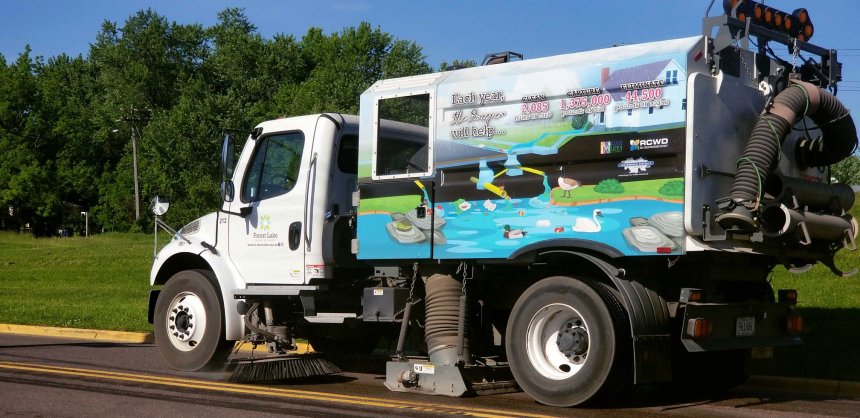
One strategy local communities have begun using to reduce stormwater pollution is to increase the number of times they sweep city streets in the fall, especially in neighborhoods with mature trees and copious amounts of leaves. The communities of Forest Lake and Stillwater began implementing enhanced street sweeping programs a couple of years ago and Woodbury will roll out a similar program this fall. In 16 smaller communities – Afton, Lake Elmo, Bayport, Baytown, Lakeland, Lakeland Shores, Lake St. Croix Beach, Linwood Twp., Marine on St. Croix, North Branch, Oak Park Heights, Rush City, Scandia, St. Mary’s Point, West Lakeland, and Wyoming – the Lower St. Croix Watershed Partnership has provided funding support to develop and launch targeted, enhanced street sweeping programs as well.
Research from the University of Minnesota and Minnesota Pollution Control Agency shows that street sweeping is one of the most cost-effective ways for communities to reduce urban water pollution. It also helps to extend the lifespan of stormwater infrastructure, reduce maintenance costs, and reduce the risk of localized street flooding due to clogged storm drains.
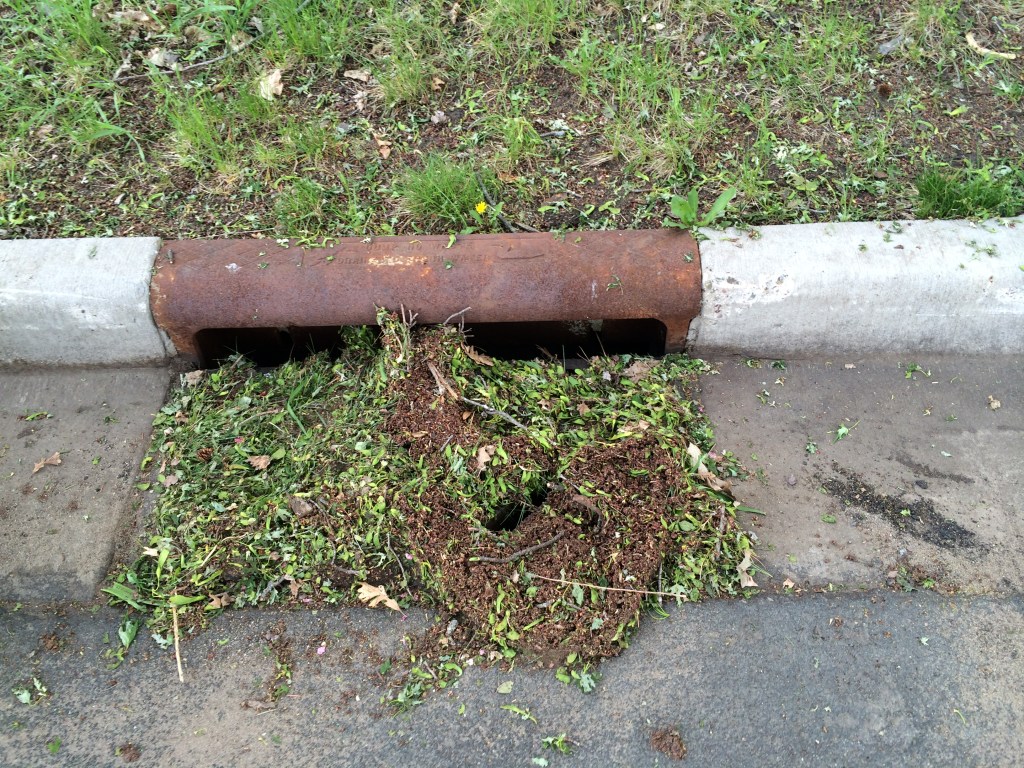
Because street sweepers are slow and can only clear a few neighborhoods at a time, however, an equally important strategy in the fight against stormwater pollution is to engage community residents in helping to keep litter, leaves and debris out of streets and storm drains. To date, Minnesotans have adopted 20,525 storm drains through the Adopt-a-Drain.org program, which is a joint venture of Watershed Partners and Hamline University. Participants agree to periodically check on their drains and sweep up leaves and debris that would otherwise get washed in when it rains.

Though it might not seem like such a simple action could make a difference, Adopt-a-Drain data shows that people have kept more than 613,220 lbs of debris out of Minnesota lakes and rivers, which translates into 821 pounds of phosphorus NOT flowing into our waterways. For additional perspective, this means that volunteers have prevented 410,500 pounds of algae from growing in the water, simply by walking outside and raking up a few extra leaves.

What else can you do to help protect the St. Croix River and other local waterways? On Saturday, Sept. 9, 9am-noon, Community Thread will hold its annual River Rally event, with volunteers working in teams to clean up the islands and shoreline of the St. Croix River, clean up the Brown’s Creek Trail, and stencil storm drains around Stillwater and Oak Park Heights. Sign up to join a team at https://communitythreadmn.org/signature-initiatives/river-rally. If you haven’t already, sign up to adopt a drain at www.Adopt-a-Drain.org. (If you don’t see your nearest drain on the map, you can drop a pin to add one.)
Meanwhile, as summer slowly slides into fall, sit back and watch the squirrels gather food and give a friendly wave to the street sweeper passing by.

 East Metro Water